

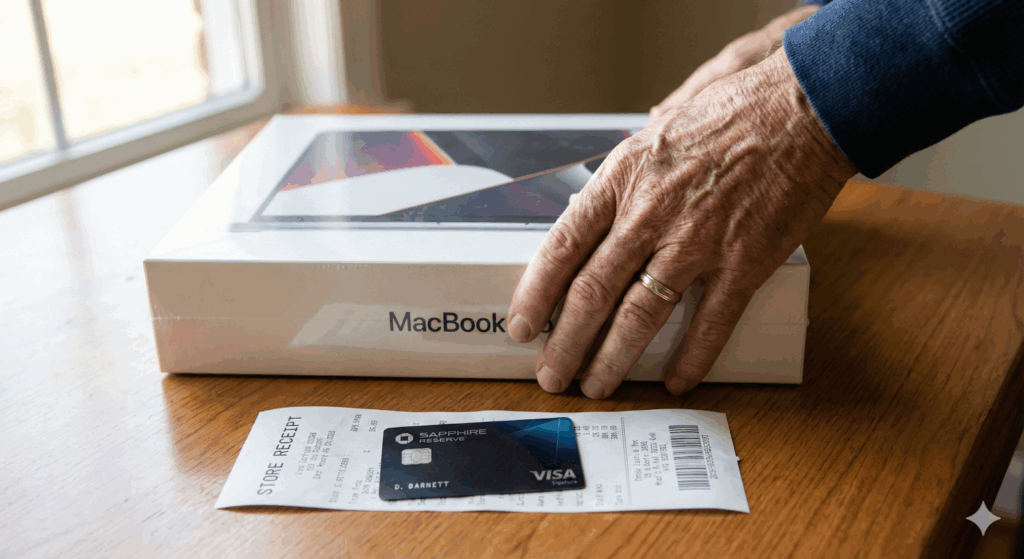

You are at the checkout counter buying a new refrigerator, dishwasher, or flat-screen TV. The salesperson leans in and asks the inevitable question:
“Would you like to add the 3-year protection plan for just $150?”
It sounds like a smart move. After all, you want to protect your investment. But before you say yes, check your wallet.
You might already have that coverage for free.
Many standard credit cards come with a powerful, hidden benefit called Extended Warranty Protection. This perk automatically doubles the manufacturer’s warranty on eligible items purchased with the card.
As your trusted advocate, we are here to show you how this benefit works so you can stop wasting money on store warranties you don’t need.
Key Takeaways
- The Benefit: Most Visa Signature, World Elite Mastercard, and American Express cards automatically double the manufacturer’s warranty (usually up to 1 extra year).
- The Cost: $0. It is included free with your card membership.
- The Rule: You must use the card to pay for the entire purchase or a portion of it (depending on the card).
- The Strategy: Keep your receipt and the original warranty paperwork. You’ll need them to file a claim.
How "Free" Extended Warranty Works
- The Purchase: You buy a new washing machine with a 1-year manufacturer’s warranty using your Chase Freedom Unlimited or Amex Blue Cash Everyday.
- The Coverage: Your credit card automatically extends that warranty by an additional 1 year.
- The Claim: If the washer breaks in Month 18 (after the manufacturer’s warranty expires), you file a claim with your credit card company. They will pay to repair it or reimburse you for the replacement cost.
Store Warranty vs. Credit Card Warranty: The Comparison
Is the store’s plan ever better? Let’s compare.
|
Feature
|
Store Protection Plan
|
Credit Card Extended Warranty
|
|---|---|---|
|
Cost
strong>
|
Expensive
((10-20% of item cost)
|
FREE
($0)
|
|
Coverage Length
|
Varies (2-5 years)
|
Usually doubles original (up to 1 extra year)
|
|
Deductible
|
Sometimes ($50 - $100)
|
$0
|
|
Process
(Interest is taxed annually).
|
Call store/third-party insurer
|
Call the number on back of card
|
|
Coverage Limit
(Interest is taxed annually).
|
Replacement cost
|
Usually capped at $10,000 per item
|
The Verdict: For most items (TVs, laptops, small appliances), the free credit card warranty is more than enough protection. Save the $150.
Which Cards Offer This Benefit?
- American Express Cards: Almost all Amex cards, including the Blue Cash Everyday® Card , offer up to 1 extra year on original manufacturer’s warranties of 5 years or less. This applies to eligible purchases made in the United States.
- Chase Freedom Unlimited / Flex: These popular cash-back cards offer 1 additional year of coverage on eligible U.S. manufacturer’s warranties of 3 years or less. This is a standard Visa Signature benefit. Learn more about Chase Freedom Unlimited .
- Capital One VentureOne: Many versions of the Capital One VentureOne (specifically Visa Signature accounts) include extended warranty protection that doubles the manufacturer’s warranty up to one additional year.
- Citi Cards: Note: Citi removed this benefit from most of their cards in 2019. Check your specific card’s Guide to Benefits.
Your "Warranty Claim" Action Plan
To use this benefit, you need to be organized. It’s not automatic in the sense that the bank knows what you bought—you have to prove it. Follow this simple 3-step system to ensure your claim is approved.
- Save the Receipt:
Don’t throw it away! Take a clear photo of the store receipt and the item’s serial number immediately after purchase. Store these photos in a dedicated “Warranty” album on your phone or email them to yourself so they are never lost. - Keep the Original Warranty:
Don’t toss the box until you’ve saved the “Warranty Card” or manual that explains the manufacturer’s coverage. You will need to submit a copy of this to prove what the original coverage was (e.g., “1 Year Parts & Labor”). - File Quickly:
If something breaks, call your credit card company immediately (usually within 60–90 days of the failure) to start the claim. Do not wait. Most insurers have strict deadlines for reporting a loss.
The "File It & Forget It" System
- The “Warranty” Album: Create a specific photo album on your smartphone labeled “Warranties.”
- Snap & Save: Immediately after buying a major item, take a photo of the receipt and the warranty page from the manual.
- Email Backup: Email those photos to yourself with the subject line: “Warranty – [Item Name] – [Date].” This makes them searchable forever.
What is NOT Covered? (The Honest Broker Check)
We want to be clear about the limitations so you aren’t surprised. Credit card extended warranties generally do not cover:
- Wear and Tear:
Normal aging or cosmetic damage (scratches/dents). - Computer Software:
Issues with Windows or apps are not covered; only the hardware is. - Used or Refurbished Items:
The item must be purchased new. - Cars and Boats:
Motorized vehicles are almost always excluded.
The Exception: When Should You Buy the Store Warranty?
- Accidental Damage: Credit card warranties typically only cover mechanical failure (it stopped working on its own). They generally do not cover accidents (you dropped it or spilled water on it). If you are buying a laptop, tablet, or smartphone and you are prone to dropping things, a store plan with “Accidental Damage Protection” might be worth the cost.
- Very Long-Term Items: If you are buying a car or a major HVAC system where you want 5–10 years of coverage, the 1-year extension from your card won’t be enough. For these major, decade-long investments, a dedicated extended warranty may provide the long-term peace of mind you need.
Frequently Asked Questions (FAQ)
Generally, no. You don’t have to “register” the toaster with your bank. The coverage is automatic as long as you used the eligible card to buy it. Just keep the receipt!
Usually, no. Extended Warranty protection typically applies only to new items with a valid original manufacturer’s warranty. It also usually excludes cars, boats, and items purchased for resale.
This is tricky. Some cards (like Chase) cover you as long as you used some points from that specific card’s program. Others require you to pay the entire amount with the card. Check your specific “Guide to Benefits.”
It’s the boring paper booklet that came with your card. If you threw it away, don’t worry. Log in to your credit card account online and search for “Benefits Guide” or call the customer service number on the back of your card to ask for a digital copy.
Yes. Most cards cap the coverage at the amount you charged to the card (up to $10,000 per item) and have an annual claim limit (e.g., $50,000 per year). For 99% of senior purchases, this is plenty.
Find the Best Credit Card Rates (Get a card that protects your purchases for free.)