

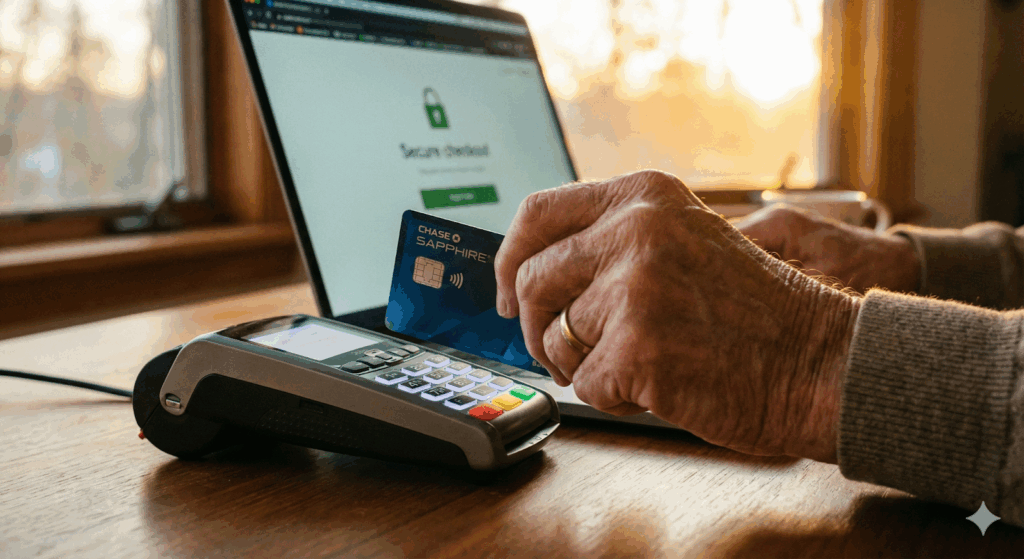

For decades, many seniors were taught that “cash is king” and “credit is debt.” Using a debit card felt like the responsible, safe choice because it kept you out of debt.
But in the age of digital fraud and skimmers, that logic has become dangerous.
Using a debit card for daily purchases like gas, groceries, or online shopping exposes your entire checking account—your rent money, your bill money, your lifeblood—to immediate theft.
As your trusted advocate, we are here to explain the critical safety difference between debit and credit, and why switching to a credit card (paid in full every month) is one of the smartest security moves a senior can make.
Key Takeaways
- The Debit Danger: When a thief uses your debit card, the money leaves your account instantly. It can take weeks to get it back.
- The Credit Shield: When a thief uses your credit card, they are stealing the bank’s money, not yours. You have $0 liability.
- The Fix: Use a credit card for all purchases to create a “firewall” between the world and your checking account.
- The Rule: Pay the credit card bill in full every month to avoid interest.
The "Empty Account" Nightmare: How Debit Fraud Works
Imagine you are at a gas station. You swipe your debit card. Unknowingly, a “skimmer” device steals your number.
Two hours later, a thief drains $2,000 from your checking account.
- The Immediate Impact: Your rent check bounces. Your automatic bill payments fail. You have no cash for groceries.
- The Fight: You call the bank. They say they will investigate, which can take 10 to 45 business days. Until they finish, your money is gone. You are the one waiting for a refund while your bills pile up.
The "Bank's Money" Advantage: Why Credit Is Safer
Now, imagine you used a credit card at that same gas station.
The thief steals the number and charges $2,000.
- The Immediate Impact: Zero. The money didn’t come out of your account. It was charged to the bank’s credit line. Your checking account balance is untouched.
- The Fight: You get a text alert: “Suspicious charge.” You reply “Fraud.” The bank immediately removes the charge. You don’t have to fill out a police report to get your rent money back because you never lost it.
The Liability Showdown: What You Could Lose
Federal law protects credit users far more than debit users. If you don’t catch the fraud instantly, the cost of using a debit card can be devastating.
|
If Fraud is Reported...
|
Credit Card Liability
|
Debit Card Liability
|
|---|---|---|
|
Before charges appear
|
$0
|
$0
|
|
Within 2 days
|
$50 (Usually $0)
|
$50
|
|
Between 3-60 days
|
$50 (Usually $0)
|
Up to $500
|
|
After 60 days
|
$50 (Usually $0)
|
UNLIMITED (You can lose everything)
|
The Top 3 Places You Should NEVER Use Debit
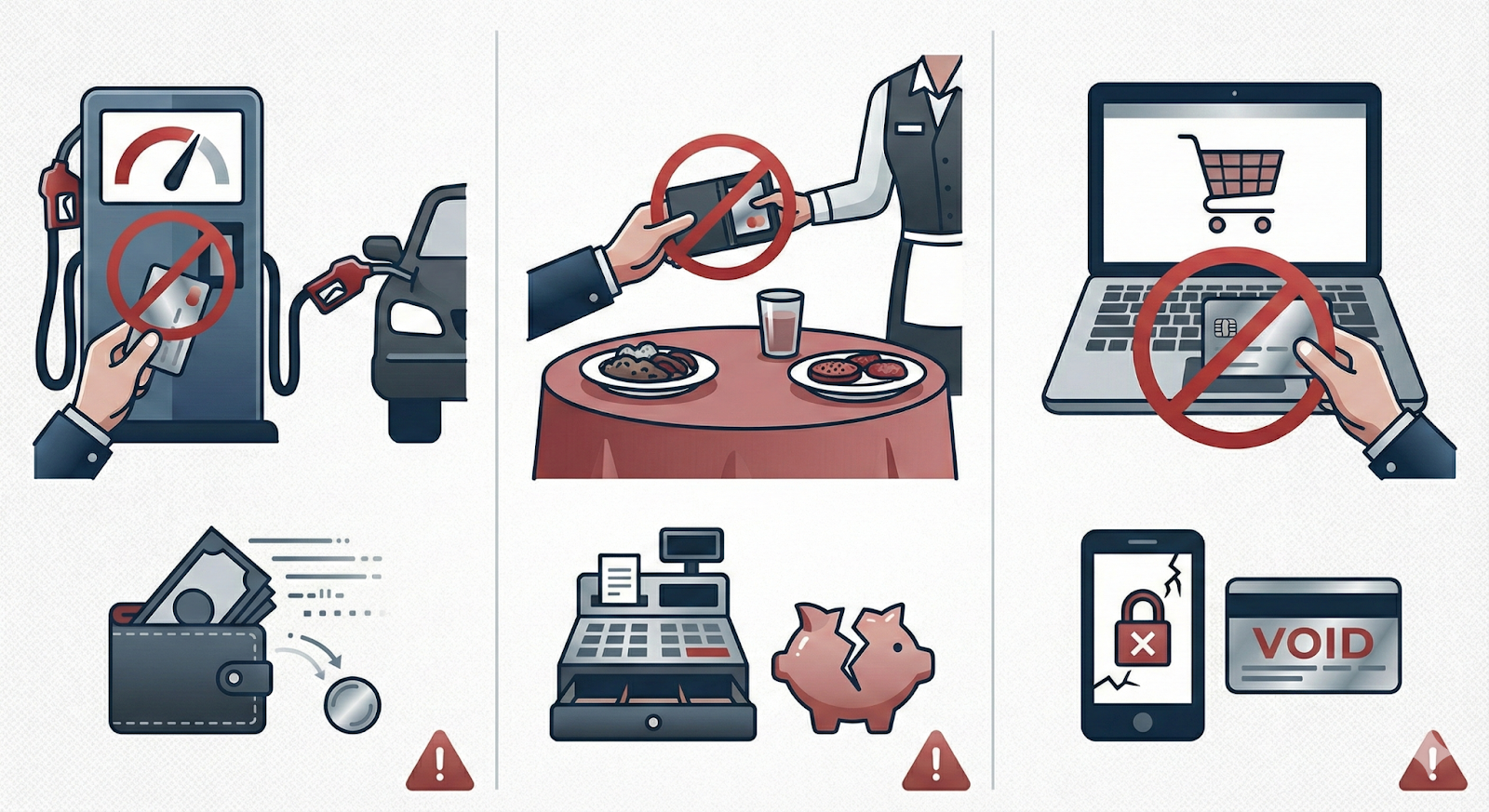
Even if you keep your debit card, avoid using it in these high-risk zones where fraud is most common. Using a credit card here creates a vital layer of separation between thieves and your retirement funds.
- Gas Stations (The #1 Risk Zone): Outdoor pumps are the primary target for “skimmers”—illegal devices thieves attach over the card reader to steal your information. Because pumps are unattended, thieves can install them in seconds. If you swipe a debit card, they capture your PIN and can drain your account immediately. Always use a credit card at the pump to protect your cash.
- Restaurants: This is one of the only places where your card leaves your sight. When a waiter walks away with your debit card, it is incredibly easy for a dishonest employee to snap a photo of the front and back or swipe it through a personal skimmer in their pocket. By the time you finish dessert, your card info could be sold online. A credit card protects you from this “out of sight” theft.
- Online Shopping: Even major retailers suffer data breaches. If you use a debit card online and the site is hacked, your checking account is directly exposed to the internet. A thief can drain your balance before you even wake up. A credit card offers a powerful buffer—if the number is stolen, you simply dispute the charge, and your actual money remains safe in the bank.
How to Use Credit Like a Debit Card (The Safe Strategy)
Many seniors worry that using a credit card will lead to debt. The solution is to change your mindset, not your spending.
The Strategy: Treat your credit card as a “Pass-Through Device.”
- Swipe the Credit Card: Use it for everything (gas, groceries, pharmacy).
- Keep Your Cash: The money stays safely in your checking account, earning interest.
- The Weekly Routine: Instead of waiting for the monthly bill, log in every Friday and pay off the current balance. This keeps your balance low and ensures you never spend money you don’t have.
The Result: You get the safety of credit, the rewards (cash back), and you pay $0 in interest.
Your "Safety Switch" Checklist
Ready to make the switch? Use this checklist to protect your accounts today.
- [ ] 1. Get the Right Card: Apply for a simple, no-fee card designed for security. We recommend the SoFi Unlimited 2% Credit Card for its $0 Fraud Liability and simple cash-back structure. It acts as a perfect shield for your checking account. Check Rates Here.
- [ ] 2. Set Up Alerts: Log into your new account and turn on “Transaction Alerts.” Set it to text you for any charge over $1. This is your early warning system.
- [ ] 3. Lock Your Debit Card: Most banking apps let you “Lock” or “Freeze” your debit card. Keep it locked and only unlock it when you actually need to use an ATM.
- [ ] 4. Update Auto-Pays: Move your recurring bills (Netflix, Utility, Insurance) to the credit card. If the card number is stolen, you just get a new card. If your checking account number is stolen, you have to close the account and change everything.
Frequently Asked Questions (FAQ)
The safest place to use a debit card is an ATM located inside a bank branch. These are monitored and less likely to have skimmers. Avoid standalone ATMs in gas stations or convenience stores.
This is a valid fear. The solution is Auto-Pay. Set it up the day you activate the card to pay the “Full Statement Balance” on the due date. This ensures you never pay a late fee or a penny of interest.
It acts as a hard limit, yes. But you can create a similar limit on a credit card. You can ask your card issuer to lower your credit limit to an amount you are comfortable with (e.g., $1,000), so you literally cannot overspend.
Only when cash is required or for specific government payments that charge a high fee for credit cards (like paying taxes). For 99% of daily purchases, credit is safer.
You must call your bank immediately. The process is governed by the Electronic Fund Transfer Act. Be prepared for your funds to be “provisionally credited” within 10 days, but the investigation can take up to 45 days.
Find the Best Credit Card Rates (Switch to a safer card with $0 Fraud Liability today.)