

A failing roof or an aging HVAC system can create sudden pressure on a fixed income. Many seniors face these large, one-time costs at the same time insurance carriers begin requiring newer roofs or when refrigerant rules make older air conditioners difficult to repair. Home equity tools can cover the work without draining retirement savings, but the choice between a HELOC and a cash-out refinance matters.
This guide focuses on using those tools specifically for roof, HVAC, and similar system replacements. It covers timing so interest remains potentially deductible, the difference between fixed and variable rates for large repairs, and how a home warranty can protect the new systems afterward.
Key Takeaways
- Interest on a HELOC or cash-out refinance may be deductible when the funds are used to substantially improve the home that secures the loan.
- A HELOC usually preserves a low existing first-mortgage rate and lets you draw only what you need.
- A cash-out refinance replaces the entire mortgage and works better when the current rate is already at or above today’s market rates.
- Keep clear records of contractor invoices and the exact draws used for the improvements.
- Pairing the new systems with a home warranty can limit future out-of-pocket repair costs.
Why Roof and HVAC Work Often Requires Equity Access
Roof replacement on a typical single-family home commonly falls between $8,500 and $16,000 in 2026 for architectural asphalt shingles, with regional variation. Full HVAC replacement (furnace plus central air) often ranges from $5,000 to $15,000 when existing ductwork can be reused. These amounts exceed what most fixed-income households can absorb from monthly cash flow or liquid savings without disruption.
Insurance pressure adds urgency. Carriers increasingly require roofs with remaining useful life before they will renew or issue new policies. Older air-conditioning systems that use phased-out refrigerants can become expensive or impossible to repair, forcing full replacement. Using home equity for these capital improvements keeps the house insurable and livable while preserving other retirement assets.
HELOC Versus Cash-Out Refinance for System Replacements
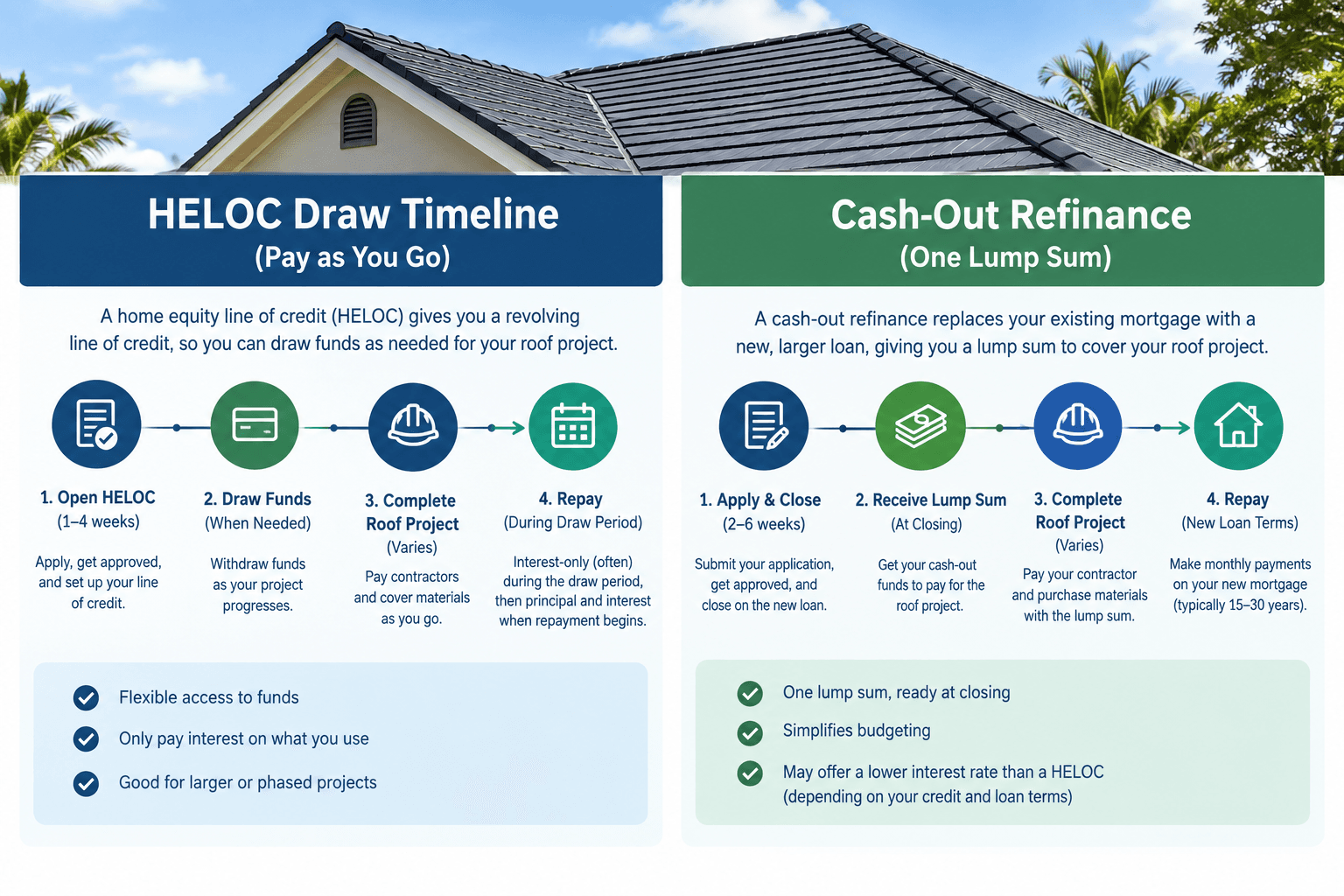
A HELOC is a revolving line of credit secured by the home. You draw funds as invoices arrive and typically pay interest only on the amount used during the draw period. Closing costs are usually low. The rate is variable and tied to the prime rate.
A cash-out refinance replaces the existing first mortgage with a new, larger loan. You receive the difference in a single lump sum at closing. The rate is usually fixed. Closing costs are higher, typically 2 to 5 percent of the new loan amount.
Price Disclaimer: All cost and rate figures are national planning estimates based on publicly available 2026 data. Actual loan terms, interest rates, closing costs, and project prices vary by location, credit profile, home value, lender, and contractor. These numbers are for educational purposes only and do not constitute a quote or guarantee.
| Feature | HELOC | Cash-Out Refinance |
|---|---|---|
| Funds received | Draw as needed | Lump sum at closing |
| Interest rate | Variable | Usually fixed |
| Closing costs | Often low or waived | 2–5% of new loan amount |
| Effect on existing mortgage | Leaves it in place | Replaces it entirely |
| Best for large one-time repairs | When current first-mortgage rate is low | When current rate is already high or you want payment certainty |
For many seniors who refinanced or purchased between 2019 and 2022 and still hold rates well below current market levels, a HELOC protects that low rate. A cash-out refinance would reprice the entire balance at today’s higher rates, often increasing the overall interest cost even if the cash portion is needed.
Tax Rules for Deductibility
Under current law, interest on home-equity debt is deductible only when the borrowed funds are used to buy, build, or substantially improve the home that secures the loan. Replacing a roof or installing a new HVAC system generally qualifies as a substantial improvement because it prolongs the useful life of the home or adds value.
Routine repairs that merely maintain existing conditions usually do not qualify. Documentation is essential. Keep the contractor’s itemized invoices and the bank records showing that the HELOC draws or refinance proceeds went directly to the improvement. The combined limit on acquisition indebtedness for loans after December 15, 2017 remains 750,000 for most filers (375,000 if married filing separately). Consult a tax professional for your specific situation.
Pairing the New Systems with Ongoing Protection
Once the roof or HVAC is replaced, a home warranty can cover future mechanical failures of the new equipment under the terms of the plan. Homeowners insurance continues to protect against sudden events such as fire or wind damage, but it does not cover normal wear or component failure. A warranty bridges that gap for seniors who prefer predictable service fees rather than large unexpected repair bills.
Sagewise maintains guides that compare home warranties suitable for older homes and explain the difference between insurance and warranty coverage. Reviewing those resources after the replacement work is complete helps protect the investment.
Choosing the Right Equity Tool
| Your Situation | Preferred Tool | Reason |
|---|---|---|
| Current first-mortgage rate is below 5% | HELOC | Preserves the low rate; draws only what is needed |
| Current rate is already at or above market | Cash-out refinance | May improve overall terms while providing the cash |
| Exact project cost is known and fixed | Either; fixed-rate home-equity loan also possible | Payment certainty is easier to budget |
| Project may expand once work begins | HELOC | Additional draws available within the limit |
| Prefer one simple monthly payment | Cash-out refinance | Consolidates everything into a single fixed obligation |
Practical Steps for Seniors and Adult Children
Obtain at least three written contractor bids that separate materials, labor, and any required permits. Confirm whether the work qualifies as a substantial improvement for tax purposes. Request loan quotes that show the exact rate, fees, and monthly payment under both a HELOC and a cash-out refinance using the same project amount. Compare the total interest cost over the expected repayment period rather than looking only at the initial rate.
Sagewise offers free matching to pre-vetted lenders who understand senior income documentation and home-improvement use cases. Related guides on the site cover HELOC versus cash-out strategies for other purposes and the interaction of home equity with Medicaid rules.
Frequently Asked Questions
Can I deduct the interest if I use the money for a new roof?
Yes, provided the funds are used to substantially improve the home that secures the loan and you itemize deductions. Keep detailed records.
Will a HELOC or cash-out refinance affect my homeowners insurance?
The loan itself does not change the insurance policy. However, completing a new roof often helps with renewability and may improve the rate the carrier offers.
How quickly can funds be available?
HELOC draws are often available within a few weeks after closing. Cash-out refinance proceeds arrive at the loan closing, which typically takes 30 to 45 days.
What if the project costs more than expected?
A HELOC allows additional draws up to the approved limit. A cash-out refinance provides only the single lump sum negotiated at closing.
Should I also consider a reverse mortgage?
A reverse mortgage is a separate product for homeowners aged 62 and older that does not require monthly principal-and-interest payments. It can fund the same repairs but follows different rules and counseling requirements.
Take the Next Calm Step
Roof and HVAC replacements protect both the physical home and the ability to keep insurance coverage in place. Using home equity thoughtfully can cover the cost while preserving monthly cash flow. The choice between a HELOC and a cash-out refinance depends mainly on your existing mortgage rate and your preference for payment certainty versus flexibility.
Sagewise provides free, no-obligation matching so you can see current options from lenders experienced with senior borrowers and home-improvement financing. A short questionnaire connects you with providers without pressure.