
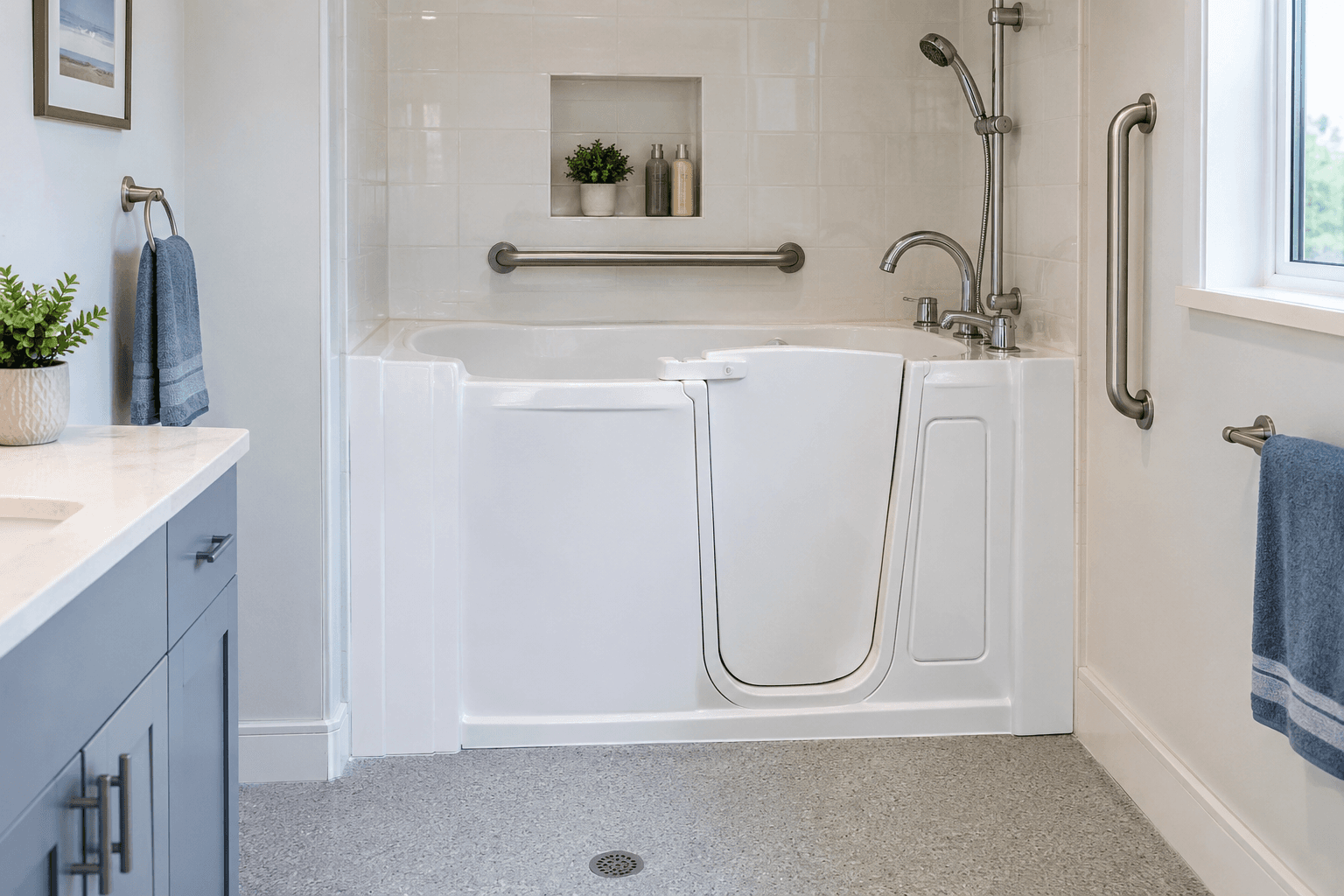
A walk-in tub can make daily bathing safer and less stressful. Low thresholds, built-in seats, and grab bars reduce fall risk. Yet the installation itself is where many seniors encounter problems: incomplete work, unexpected costs, missing permits, or warranties that prove thin once something goes wrong.
This guide focuses on the practical steps that protect you before, during, and after the install. The goal is a finished tub that works as promised and a paper trail that stands up if repairs are needed later.
Key Takeaways
- Verify license, insurance, and local permit history before signing any contract.
- Confirm that the quoted price includes demolition, plumbing changes, electrical work, and disposal.
- A legitimate installation warranty should cover labor and workmanship for at least one year and explain exactly what is excluded.
- Pairing the new tub with a home-warranty policy can add a second layer of protection for related systems.
- Keep every invoice, permit, and warranty document in one place.
Why Installation Quality Matters More Than the Tub Model
The tub itself is only part of the project. Most walk-in tubs require modifications to the existing bathroom: removal of the old tub or shower, changes to drain lines, possible reinforcement of the floor, and electrical work for heaters, jets, or lighting. Incomplete or poorly executed work can lead to leaks, electrical hazards, or a unit that does not drain properly.
Seniors on fixed incomes have less room to absorb follow-up repair bills. Taking time to vet the contractor and the warranty terms reduces the chance of those extra costs.
Contractor Vetting: Clear Questions That Reveal Risk
Ask every potential contractor the same set of questions and compare the answers in writing.
- Are you licensed and insured for plumbing and general contracting in this county or city? Request the license number and verify it on the state or local licensing board website.
- Will you pull all required permits, or is that left to the homeowner?
- Does the quote include removal and disposal of the old tub, any necessary floor or wall repairs, and final cleanup?
- Who performs the plumbing and electrical portions—your own crew or subcontractors? If subcontractors are used, are they also licensed and insured?
- Can you provide three recent local references who had similar work done?
Be cautious if a contractor pressures you to sign the same day, offers a large discount only if you decide immediately, or cannot produce proof of license and insurance. High-pressure tactics and vague answers about permits are common warning signs.
Permits: Why They Protect You
Most jurisdictions require permits for plumbing and electrical changes. A permit triggers inspection. The inspection confirms that the work meets local code for drainage, waterproofing, and electrical safety.
If a contractor suggests skipping permits “to save time and money,” the risk falls on the homeowner. Unpermitted work can create problems when the home is later sold, refinanced, or used as collateral for a reverse mortgage. Insurance claims for water damage may also be complicated if the installation never passed inspection.
Confirm in the written contract that the contractor is responsible for obtaining and closing all permits.
What a Legitimate Installation Warranty Should Cover
A solid installation warranty typically includes:
- Labor and workmanship for a stated period (commonly one year, sometimes longer)
- Correction of leaks at connections made during the install
- Proper drainage and operation of included features (door seal, jets, heater) that fail due to installation error
Read the exclusions carefully. Many warranties exclude damage from improper use, lack of maintenance, or problems that originate in the home’s existing plumbing or electrical system. Manufacturer warranties on the tub shell and components are separate from the installer’s workmanship warranty. Keep both documents.
Ask whether the warranty is transferable if the home is sold and whether it remains valid if you later add a home-warranty policy.
Pairing the Tub with a Home-Warranty Policy
A walk-in tub installation often involves older plumbing and electrical systems. A home-warranty policy can cover failures in related items such as water heaters, main plumbing lines, or electrical panels that are outside the installer’s warranty.
Before purchasing a policy, confirm that the walk-in tub and its specific components are not excluded. Some policies treat jetted or specialty tubs differently from standard fixtures. Compare coverage limits, service fees, and waiting periods. Sagewise can help you review current home-warranty options that fit senior-owned homes.
Simple Red-Flag Checklist
| Red Flag | Why It Matters | What to Do Instead |
|---|---|---|
| No license or insurance proof | Leaves you exposed to liability and incomplete work | Verify credentials before any deposit |
| “We handle permits later” or “No permit needed” | Unpermitted work risks failed inspections and future title issues | Require written responsibility for permits |
| Large discount only if you sign today | High-pressure sales often precede incomplete scopes | Take the quote and compare at least one more |
| Vague warranty language | Makes later claims difficult | Demand clear written coverage and exclusions |
| Deposit larger than 30–50 % before work starts | Increases risk if the contractor disappears | Limit deposit and tie payments to completed stages |
Other Sagewise Services That Support the Project
Sagewise is an independent comparison and matching service. It does not sell products or originate loans. Once you are ready to move forward, you can explore related options through the same free process:
- Walk-in tub provider matching to compare models and installation packages
- Home-warranty comparisons that can cover related systems after the install
- Home-equity options if you need to fund the project without depleting cash reserves
Each matching request is free and carries no obligation.
Frequently Asked Questions
How much should a typical walk-in tub installation cost beyond the tub itself?
Labor, plumbing modifications, disposal, and permits often add several thousand dollars. Request an itemized quote so you can see each component.
Can I install a walk-in tub myself or with a handyman?
Most units require licensed plumbing and electrical work. DIY or unlicensed installation usually voids manufacturer warranties and may violate local code.
What if the installer goes out of business after the work is done?
A manufacturer warranty may still cover the tub components. A separate home-warranty policy or an extended workmanship bond offers additional protection. Ask about bond or insurance coverage before signing.
Will a walk-in tub affect a future reverse-mortgage appraisal?
A properly installed and permitted unit is generally viewed as an improvement. Unpermitted or incomplete work can create repair requirements that delay or reduce proceeds.
Closing Perspective
A walk-in tub can improve safety and daily comfort. The difference between a good outcome and an expensive problem usually lies in the contractor selection, the permit process, and the strength of the written warranty. Take the time to verify credentials, insist on clear scope and permits, and keep every document.
When the installation is finished and inspected, you gain both a safer bathroom and a paper trail that protects your investment.