
The Retirement Pivot: Why Your Personal Card is a Liability
From our archive. This guide is being reviewed and updated under our editorial standards. Check figures against the official source before you act.
Sagewise is free to use and may be paid when you click links or submit forms on this page. That never changes what we write. How we make money
In 2026, the concept of “retirement” has changed. For many, it’s not about stopping work, but about finally starting the work they love—whether that’s consulting, selling crafts, or opening a small boutique. But as your SageWISE Financial Bodyguard, I have to warn you about a major trap: using your personal credit card to fund your new venture.
When you use your personal card for business supplies, you are “Piercing the Corporate Veil.” In 2026, with the IRS using sophisticated AI to flag “mixed” spending, this is a red flag. If your business ever faces a legal dispute or a tax audit, a judge can argue that your business and personal assets are the same. This puts your home, your Social Security checks, and your hard-earned 401(k) at risk. A dedicated business credit card is the legal firewall your retirement needs.
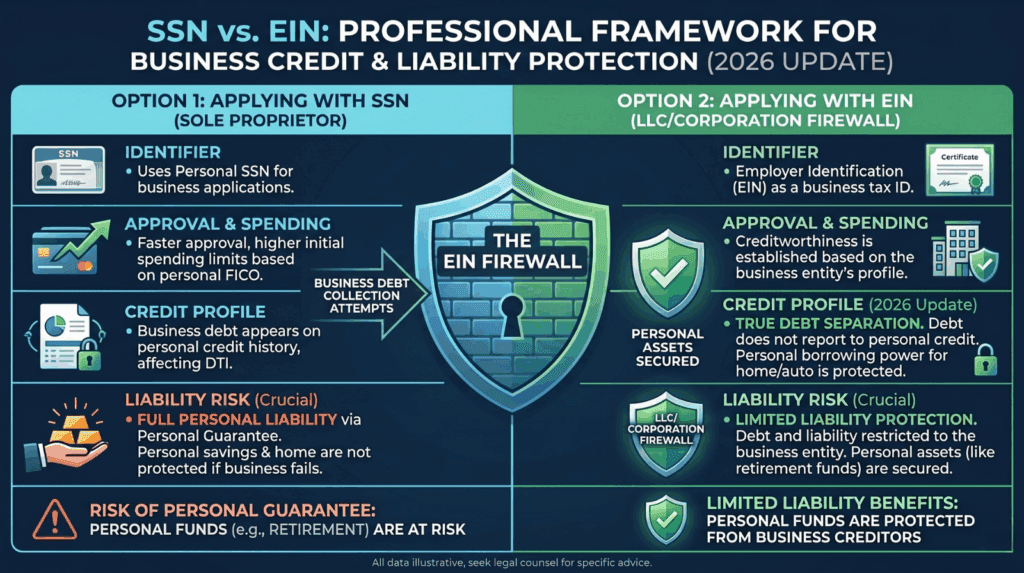
The Technical Audit: EIN vs. SSN Applications
Most retirees start as Sole Proprietors. In 2026, you have two technical paths for a business card application. Understanding the math and legal risk of each is essential for your financial audit.
1. Applying with your Social Security Number (SSN)
You don’t need a formal LLC to get a business card. You can apply as a “Sole Proprietor” using your SSN.
- The Benefit: Fast approval; it uses your decades of strong personal credit to secure high spending limits.
- The Risk: Most cards require a Personal Guarantee. If the business fails, the bank can technically come after your personal savings to settle the debt.
2. Applying with an EIN (The LLC Firewall)
AnEmployer Identification Number (EIN) is a tax ID for your business.
- The Benefit: It builds a Business Credit Score separate from your personal FICO.
- 2026 Update: Newer cards likeRamp allow you to apply with only an EIN. This means the debt never shows up on your personal credit report, keeping your personal borrowing power “clean” for things like a new home or car.
The 2026 SageWISE Audit: Best Cards for Your Side Business
| Card Name | Best For | Why It Passes the SageWISE Audit |
|---|---|---|
| Ink Business Cash® | Consultants/Office | Earns 5% back on internet, phone, and cable. Perfect for those working from home. |
| Amex Blue Business Plus® | General Spending | Flat 2x points on everything. No annual fee. The simplest "audit trail" for 2026. |
| Capital One Spark Cash Plus | High-Value Inventory | No preset spending limit. Best if you're buying large amounts of stock or equipment. |
| BofA Business Secured | Building Credit | Requires a deposit. Ideal if you want to keep business credit completely separate. |
Strategic Maneuver: The "One-Way" Tax Firewall
The IRS is much more aggressive in 2026 regarding “commingled” expenses. If you are audited, the first thing they will look for is personal items (like groceries or a dinner out with grandkids) on a business card.
SageWISE Tip: Treat your business card as a “One-Way Valve.” You can move personal money into the business account to pay the bill, but you should never use the business card to pay for your personal life. At tax time, this dedicated card statement becomes a pre-organized “Deduction Map,” potentially saving you $3,000+ in accounting fees.
The 2026 "One, Big, Beautiful Bill" Deduction Audit
Under the latest 2026 tax laws, seniors aged 65+ are eligible for an enhanced $6,000 deduction (or $12,000 for couples).
- The Audit: By putting all your side-business expenses—like software, business travel, and home office supplies—on a dedicated card, you can claim those business deductions on top of the enhanced senior standard deduction.
- Interest Deductibility: In 2026, interest paid on a business credit card for legitimate business purchases is fully tax-deductible. This is a major advantage over personal cards, where interest is simply “lost” money.
The "Personal Guarantee" Audit: Is Your Retirement Safe?
This is the most important part of your 2026 audit. Most business cards for startups are “Personally Guaranteed.” This means if your business venture goes south, the bank has a legal claim to your personal assets.
How to Shield Yourself:
- Build Business Credit Early: Use your card for small, recurring bills and pay it off immediately. Within a year, you’ll have a business credit score.
- Request a Limit Audit: Once you have a business score, call your bank and ask to transition to a “Non-Personal Guarantee” account based on your business revenue.
- The “Safety Buffer”: Never carry a balance on your business card that exceeds the cash you have in your business bank account. This ensures that even if the business fails, you can “wash” the debt without touching your retirement accounts.
Financial Bodyguard Resources
- Audit Your Monthly Leakage: Redirect personal insurance savings toward your new side business.
- Find Hidden Savings: Ensure your business “company car” is getting the best senior rates in 2026.
- Calculate Your New Income: See if an annuity can provide a steady monthly “seed fund” for your venture.
Protect Your Retirement, Grow Your Legacy
Starting a side business in your 60s is a bold move. But don’t let a “Bodyguard” failure—like mixing your personal and business money—put your retirement at risk. Audit your cards, secure an tax ID, and build a business that is legally and financially separate from your personal life.
Find the Best Business Credit Cards for 2026
This guide is for general education and isn't individual financial, insurance, legal or tax advice. Spot an error? Tell us and we'll review it under our corrections policy.