
Clearing Title Issues Before a Reverse Mortgage or Cash Sale: Liens, Old Heirs & Clouds on Title
From our archive. This guide is being reviewed and updated under our editorial standards. Check figures against the official source before you act.
Sagewise is free to use and may be paid when you click links or submit forms on this page. That never changes what we write. How we make money
A reverse mortgage or cash sale can unlock home equity for seniors who need funds or want to simplify. Both paths require a clear title. Lenders and cash buyers will not close if liens, unresolved heir claims, or other clouds remain on the property. These issues surface more often with older homes that have been in the family for decades.
This guide explains the most common title problems seniors encounter, the typical cost and timeline to resolve them, and the practical steps that keep a transaction moving.
Key Takeaways
- Clear title is mandatory for both reverse mortgages and cash sales.
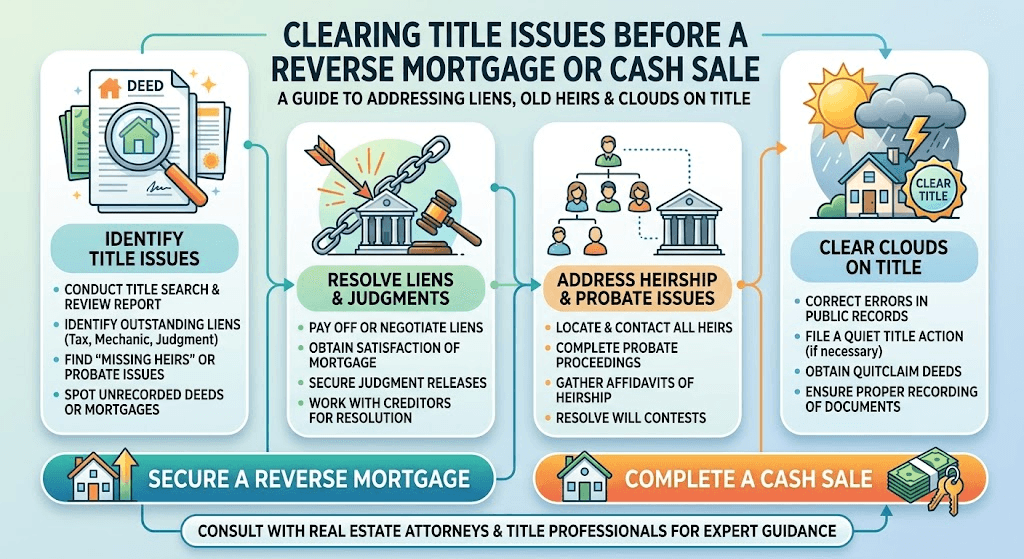
- Common problems include old tax liens, unpaid judgments, missing heir signatures, and unreleased mortgages from prior owners.
- Resolving title issues usually takes weeks to several months and can cost a few hundred to several thousand dollars depending on complexity.
- Starting the title search early prevents last-minute delays or deal cancellations.
- The Home Equity “Cash Unlock” Calculator can help estimate available equity once title is clear.
Why Title Must Be Clear
A reverse mortgage (HECM) is insured by the Federal Housing Administration. The lender must confirm that the borrower holds clear, marketable title so the property can serve as collateral. Cash buyers and their title companies perform the same check. Any outstanding claim that could reduce the value or create future ownership disputes will stop the closing.
Seniors who have owned the same home for 20, 30, or 40 years are more likely to encounter these issues. Prior mortgages may never have been formally released. A deceased co-owner’s estate may still show an interest. Old tax or contractor liens can remain on record even after the debt was paid.
Common Title Problems Seniors Face
Unreleased prior mortgages or deeds of trust
When a previous loan was paid off, the lender sometimes failed to record the release. The old lien still appears on the title search.
Tax liens or judgment liens
Unpaid property taxes, federal tax liens, or court judgments can attach to the property. Even small amounts must be cleared or subordinated.
Missing or unresolved heir interests
If a spouse or co-owner died without a clear probate or transfer-on-death deed, other heirs may still hold a legal claim. All necessary signatures or court orders are required before title can pass cleanly.
Clouds from old surveys, easements, or boundary disputes
Older surveys or unrecorded agreements can create uncertainty about exact property lines or access rights.
Name variations and clerical errors
Slight differences in how a name was recorded over the years can require affidavits or corrective documents.
Typical Cost and Timeline to Clear Title
Price Disclaimer: Cost and timeline figures are national planning estimates based on publicly available 2026 information. Actual expenses and durations vary by state, county, complexity of the issue, and professional fees. These numbers are for educational purposes only and do not constitute a quote or guarantee.
| Issue Type | Typical Cost Range | Typical Timeline |
|---|---|---|
| Simple unreleased mortgage or clerical error | $200 – $800 | 2 – 6 weeks |
| Tax or judgment lien payoff and release | Amount of lien + $300 – $1,000 | 4 – 12 weeks |
| Heir or probate-related clearance | $1,000 – $5,000+ | 2 – 6 months or longer |
| Survey or boundary correction | $800 – $3,000 | 4 – 12 weeks |
| Complex multi-issue package | $2,000 – $10,000+ | Several months |
Title companies and real-estate attorneys handle most of this work. Many reverse-mortgage lenders will order the preliminary title search early in the process so problems surface before the appraisal and underwriting stages.
Practical Steps to Clear Title
- Order a preliminary title search as soon as you begin exploring a reverse mortgage or cash sale.
- Review the commitment letter carefully with the title company or attorney.
- Address each exception item systematically. Pay off small liens if possible. Locate and record missing releases. Open a modest probate if heir signatures are required.
- Keep copies of every recorded document and confirmation of release.
- Confirm with the lender or buyer’s title company that all exceptions have been removed or accepted before the final closing date.
Starting early is the single most effective way to protect the timeline. Waiting until the appraisal is complete or the loan is otherwise ready often forces expensive rush work or causes the transaction to fall through.
Is Title Ready for Equity Access?
| Situation | Recommended First Action | Likely Impact on Timeline |
|---|---|---|
| Home owned solely in your name for decades with no known issues | Order preliminary title search | Usually clear within weeks |
| Spouse or co-owner deceased | Confirm probate or transfer documents | May add 1–6 months |
| Old mortgage or tax lien appears | Contact lien holder for release or payoff | 4–12 weeks typical |
| Multiple heirs or complex ownership history | Consult real-estate attorney early | Several months possible |
| Ready to estimate available equity | Use the Home Equity “Cash Unlock” Calculator after title is clear | Accurate numbers once clouds are removed |
The Home Equity “Cash Unlock” Calculator (available under Sagewise Tools) helps estimate how much equity may be available through a HELOC or reverse mortgage once title issues are resolved. Running the numbers after the title search is clean gives a realistic picture of the funds that can actually be accessed.
Related Sagewise Resources
Sagewise maintains guides on reverse-mortgage requirements, the importance of continuous homeowners insurance, and the steps involved in cash sales. Reviewing those materials alongside the title process helps keep the full transaction on track. Free matching is available for seniors who want to explore reverse-mortgage or home-equity options with providers familiar with title-clearance timelines.
Frequently Asked Questions
Can a reverse mortgage close with a small lien still on title?
Usually no. Most lenders require all monetary liens to be paid or formally subordinated before closing. Minor non-monetary exceptions are sometimes accepted with lender approval.
Who pays to clear the title?
The seller (or reverse-mortgage borrower) is typically responsible for clearing existing clouds so that marketable title can be delivered.
How long does a basic title search take?
A standard search and commitment letter often arrives within one to two weeks. Complex older properties can take longer.
What if an heir cannot be located?
The attorney may need to use quiet-title procedures or other court processes. These steps add time and cost but are sometimes the only path to clear title.
Does a living trust avoid these problems?
A properly funded and recorded living trust can simplify transfer, but the trust itself must hold a clear title. Existing liens or prior ownership defects still need to be addressed.
Take the Next Calm Step
Title issues are common with long-held family homes, yet most can be resolved with time and the right professionals. Ordering the title search early and addressing each item methodically protects both the timeline and the equity you expect to unlock.
Sagewise offers free, no-obligation matching so you can connect with reverse-mortgage and home-equity providers who understand senior title situations. A short questionnaire starts the process without pressure.
Ready to explore equity options once the title is clear?
Home Equity “Cash Unlock” Calculator
This guide is for general education and isn't individual financial, insurance, legal or tax advice. Spot an error? Tell us and we'll review it under our corrections policy.