
Selling a Home That Already Has a Reverse Mortgage: Payoff Timeline, Surplus Equity & Heir Options
From our archive. This guide is being reviewed and updated under our editorial standards. Check figures against the official source before you act.
Sagewise is free to use and may be paid when you click links or submit forms on this page. That never changes what we write. How we make money
A reverse mortgage does not lock you into the home forever. Many borrowers later decide to sell—whether to move closer to family, enter assisted living, or simplify their finances. Heirs may also face the same decision after the borrower passes away or permanently leaves the property.
The process is straightforward once you understand the timeline, how the loan balance is calculated, and what happens to any remaining equity. This guide walks through the practical steps so the sale feels orderly rather than rushed.
Key Takeaways
- The reverse-mortgage loan becomes due when the home is sold or is no longer the borrower’s primary residence.
- The servicer provides a current payoff amount that includes principal, accrued interest, and mortgage-insurance premiums.
- Any surplus after the loan is paid belongs to the borrower or the estate.
- Heirs have defined time windows to sell, refinance, or turn the property over to the lender.
- Clear communication with the servicer and a realistic closing timeline prevent last-minute surprises.
When the Loan Becomes Due
A Home Equity Conversion Mortgage is a non-recourse loan. It must be repaid when one of the following occurs:
- The last surviving borrower sells the home
- The home is no longer the primary residence (for example, a permanent move to assisted living lasting more than 12 consecutive months)
- The last borrower passes away
At that point the servicer issues a formal due-and-payable notice and begins calculating the exact payoff figure.
Payoff Timeline and Mechanics
Once the decision to sell is made, contact the reverse-mortgage servicer promptly. Request a written payoff quote that is good through a specific date. The quote includes:
- Outstanding principal (all funds advanced)
- Accrued interest
- Accrued mortgage-insurance premiums
- Any servicing fees allowed under the loan documents
Most servicers can provide the figure within a few business days. Because interest continues to accrue daily, the final amount at closing will be slightly higher than an earlier quote. Title companies and closing attorneys are familiar with this process and will obtain an updated figure shortly before settlement.
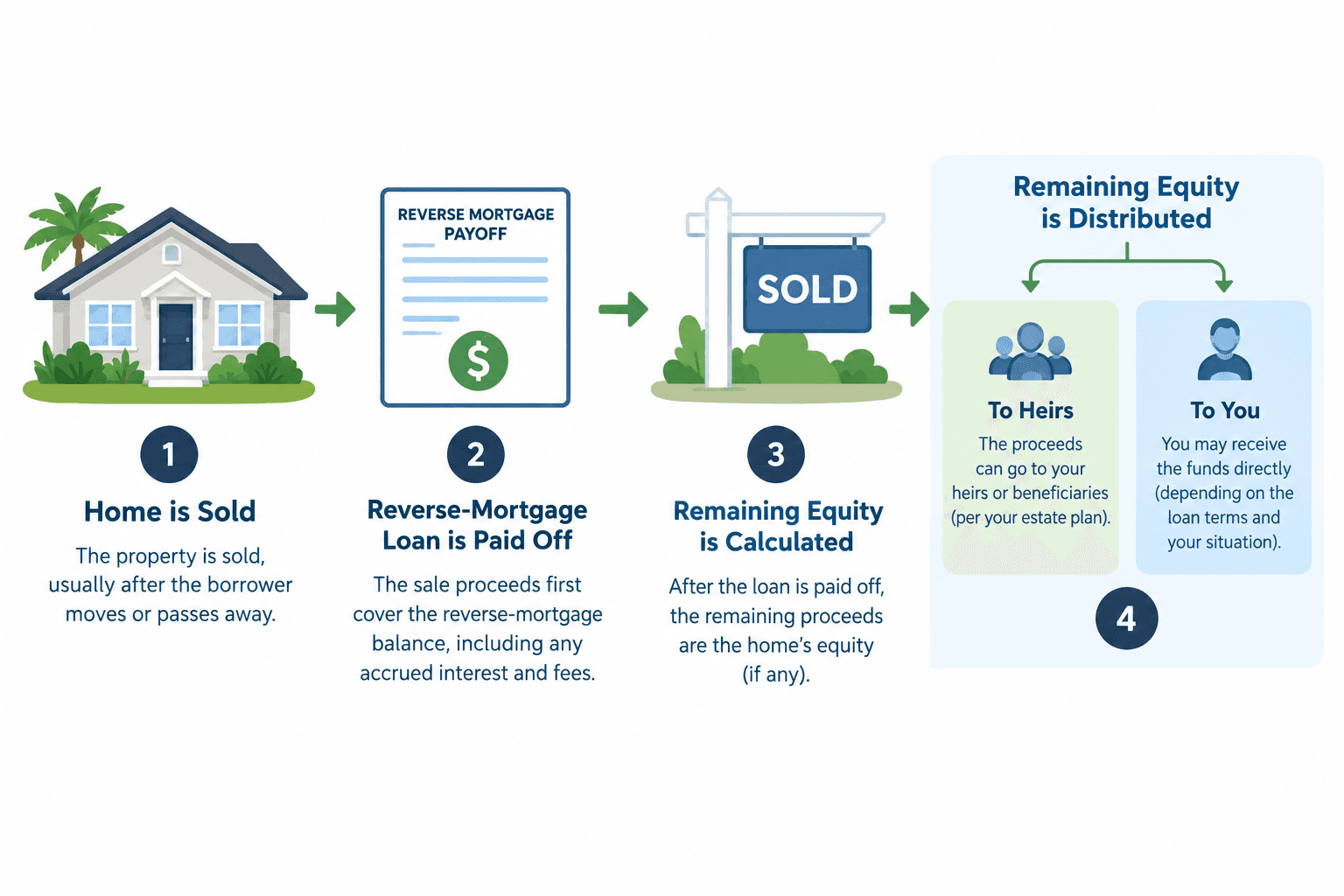
The loan is paid in full from the sale proceeds at closing. The servicer then releases the mortgage lien so clear title can transfer to the buyer.
What Happens to Surplus Equity
If the home sells for more than the total payoff amount, the difference belongs to the borrower (if still living) or to the estate. The surplus is distributed according to the will, trust, or state intestacy rules after any other claims against the estate are settled.
Because the loan is non-recourse, the borrower or heirs never owe more than the home’s value. If the payoff amount exceeds the sale price, the FHA mortgage-insurance fund covers the shortfall. The estate is not required to make up the difference from other assets.
Options Available to Heirs
When the last borrower passes away, heirs typically receive a notice from the servicer explaining their choices and the applicable deadlines. Common paths include:
- Sell the home
Heirs list the property, pay off the reverse mortgage from the proceeds, and keep any surplus. Most servicers allow at least six months (and often longer with approved extensions) to complete the sale. - Keep the home by refinancing or paying off the balance
Heirs who want to retain the property can pay the full balance in cash or refinance into a new traditional mortgage in their own names. The non-recourse feature still protects them; they cannot be required to pay more than the home is worth. - Deed the property back to the lender
If the loan balance exceeds the home’s value or heirs prefer not to manage a sale, they can convey the title to the servicer. This satisfies the debt without further obligation.
HUD rules give heirs a reasonable window to decide. Prompt communication with the servicer preserves the maximum flexibility.
Practical Steps for Borrowers Who Decide to Sell
- Contact the reverse-mortgage servicer and request a current payoff quote.
- Obtain a realistic market analysis or appraisal so you know the likely sale price.
- Share the payoff figure with your real-estate agent and closing attorney early.
- Confirm whether any Life Expectancy Set-Aside or repair escrow remains and how it will be handled.
- Keep property taxes and homeowners insurance current until the sale closes; failure to do so can create additional complications.
Side-by-Side View of Outcomes
| Situation | Loan Payoff Source | Surplus Goes To | Heir or Borrower Liability Beyond Home Value |
|---|---|---|---|
| Borrower sells while living in the home | Sale proceeds | Borrower | None (non-recourse) |
| Heirs sell after borrower’s death | Sale proceeds | Estate / heirs | None (non-recourse) |
| Heirs refinance or pay cash to keep home | New loan or personal funds | N/A (home retained) | Limited to the home’s value |
| Home value is less than loan balance | Sale proceeds + FHA insurance | None | None (non-recourse) |
Tools That Help Clarify the Numbers
Before listing the home, several free tools on Sagewise can provide useful context:
- Home Transition Analyzer – Helps compare the net proceeds from a sale against the ongoing cost of staying.
- Aging-in-Place Budgeter – Useful if you are weighing a move to assisted living versus remaining in the home a while longer.
- Mortgage-Free Planner – Shows the monthly cash-flow change once the reverse mortgage is paid off through a sale.
- Home Equity “Cash Unlock” Calculator – Offers a quick estimate of remaining equity under current age and value assumptions.
Running one or two of these tools supplies concrete figures you can share with family or a real-estate professional.
Other Sagewise Services That Support the Process
Sagewise is an independent comparison and matching service. It does not sell homes or originate loans. If a sale is underway or being considered, you can explore related options through the free matching process, including cash-for-homes programs that specialize in simplified transactions or reverse-mortgage refinancing if an heir wishes to keep the property.
Frequently Asked Questions
How long do heirs usually have to sell the home?
Most servicers allow a minimum of six months from the due-and-payable notice. Extensions are often granted when the heirs show active progress toward a sale.
Can the borrower sell the home and still receive the surplus if a reverse mortgage is in place?
Yes. The loan is paid first from the proceeds; any remaining amount is paid to the borrower at closing.
Does the sale trigger capital-gains tax?
The normal primary-residence exclusion rules still apply. Loan proceeds themselves are not taxable income. Consult a tax professional about any gain above the exclusion limits.
What if the home needs repairs before it can be sold?
Minor repairs can often be handled from sale proceeds or a short-term arrangement with the buyer. Significant required repairs may need to be completed or escrowed; discuss options with the servicer and your agent early.
Closing Perspective
Selling a home that carries a reverse mortgage follows a clear sequence: obtain the payoff figure, market the property, and satisfy the loan at closing. Any equity that remains after the payoff belongs to you or your heirs. The non-recourse protection ensures that neither you nor your family will be asked to pay more than the home is worth.
Start with accurate numbers and open communication with the servicer. The process then becomes a manageable transition rather than a source of uncertainty.
Want a clearer picture of remaining equity or next-step options?
Visit our Tools page and try the Home Transition Analyzer or Aging-in-Place Budgeter. When you are ready for personalized information on sale or refinance paths, the free matching service is available with no obligation. Move forward only when the timing feels right for you and your family.
This guide is for general education and isn't individual financial, insurance, legal or tax advice. Spot an error? Tell us and we'll review it under our corrections policy.