
Flood, Earthquake & Other Hazard Insurance for Senior Homeowners: When Standard Policies Fall Short
From our archive. This guide is being reviewed and updated under our editorial standards. Check figures against the official source before you act.
Sagewise is free to use and may be paid when you click links or submit forms on this page. That never changes what we write. How we make money
Standard homeowners insurance covers many everyday risks. It does not cover everything. Flood damage, earthquake damage, and certain other hazards are routinely excluded. For seniors who have built substantial equity and plan to age in place, those gaps can turn a natural event into a financial crisis.
This guide explains the most common exclusions, the cost and availability of specialized coverage, and how gaps can affect reverse-mortgage eligibility or a future sale. The goal is clear information so you can decide whether additional protection fits your location, budget, and peace-of-mind priorities.
Key Takeaways
- Standard homeowners policies exclude flood and earthquake damage in nearly all cases.
- Separate policies or endorsements are required for those risks.
- Lenders and reverse-mortgage servicers may require proof of adequate coverage in high-risk zones.
- Premiums vary widely by location, home value, and deductible choices.
- Reviewing coverage before a claim occurs is far less stressful than discovering a gap afterward.
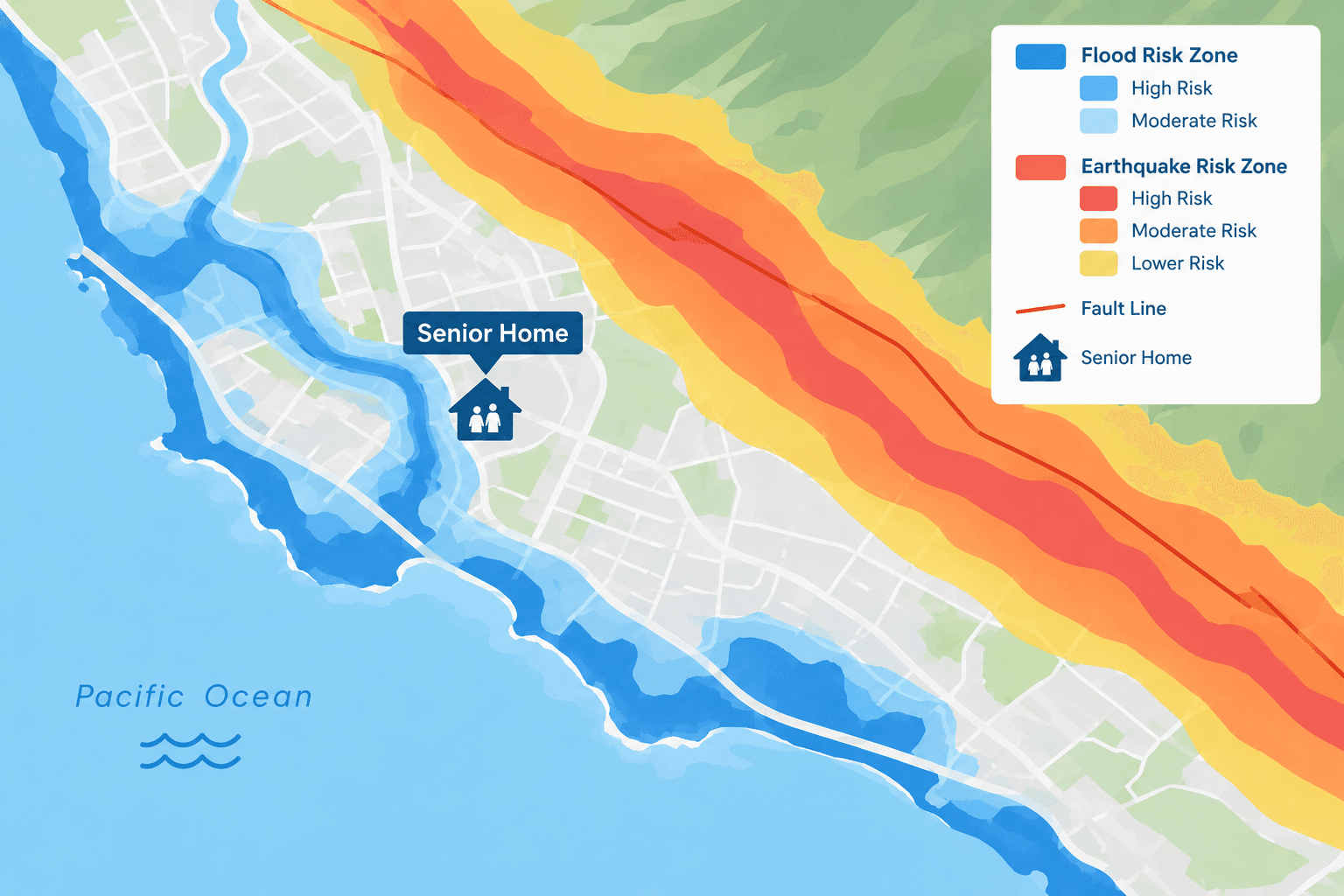
What Standard Policies Usually Exclude
A typical homeowners policy covers fire, wind (in most areas), theft, liability, and certain water damage from burst pipes. It does not cover:
- Flood damage from rising water, storm surge, or rapid snowmelt
- Earthquake or earth-movement damage
- Certain types of sewer backup or groundwater seepage unless specifically added
- Damage from neglect or deferred maintenance
The exact language appears in the exclusions section of the policy. Reading that section once a year, or after any major renovation, prevents surprises.
Flood Insurance: The Most Common Gap
The National Flood Insurance Program (NFIP) and a growing number of private insurers offer flood policies. Coverage is available for the building and, separately, for contents. Base flood elevation, location in a Special Flood Hazard Area, and the age and construction of the home all influence the premium.
Seniors in moderate-risk zones sometimes skip coverage because they have never flooded. A single event can still produce tens of thousands of dollars in damage. Reverse-mortgage and traditional lenders often require flood insurance when the property sits in a high-risk zone. Even when it is not required, the cost of recovering from an uninsured flood can force an unwanted equity draw or sale.
Earthquake Coverage
Earthquake insurance is typically purchased as a separate policy or an endorsement. It carries higher deductibles than standard homeowners coverage, often 10 to 20 percent of the dwelling limit. Premiums are highest in active seismic zones and lower (or unavailable) elsewhere.
Because the deductible is a percentage rather than a flat dollar amount, a senior with a $400,000 dwelling limit could face a 40,000–80,000 out-of-pocket cost before coverage begins. That figure matters on a fixed income. Some households choose higher deductibles to keep premiums manageable; others decide the risk does not justify the annual cost.
Other Hazard Add-Ons Worth Reviewing
- Sewer and drain backup endorsements
- Ordinance or law coverage that pays the extra cost of bringing repairs up to current code
- Identity-theft or cyber endorsements if personal information is a concern
- Scheduled personal-property coverage for higher-value items
Each add-on has its own premium and deductible. Requesting a simple menu of options from your agent once a year keeps the decisions current.
How Coverage Gaps Affect Reverse Mortgages and Sales
Reverse-mortgage rules require the borrower to maintain homeowners insurance and to keep the property in good repair. In flood zones the servicer may also require an active flood policy. Lapses can trigger forced-placed insurance (usually more expensive) or, in extreme cases, default proceedings.
When the home is later sold, buyers and their lenders will scrutinize insurance history and available coverage. A property in a high-risk flood or earthquake zone without adequate insurance can face longer marketing times or lower offers. Addressing gaps while you still own the home preserves both financing options and resale flexibility.
Practical Cost-Management Steps for Fixed Incomes
- Request a current declarations page and a plain-language list of exclusions from your insurer.
- Check the FEMA flood-map service or state geological survey to confirm your actual risk level.
- Ask for quotes on flood and earthquake coverage with at least two deductible options.
- Compare the annual premium against the potential out-of-pocket cost of an uninsured event.
- Review senior discounts, claims-free discounts, and bundling options that may lower the total.
- Keep proof of every policy with your important papers so a servicer or heir can locate it quickly.
Simple Decision Matrix
| Risk Type | Standard Policy Covers? | Separate Policy or Endorsement Needed? | Typical Deductible Style | Priority for Most Seniors |
|---|---|---|---|---|
| Flood | No | Yes | Flat dollar | High in mapped flood zones |
| Earthquake | No | Yes | Percentage of dwelling limit | High in active seismic areas |
| Sewer backup | Rarely | Often available as endorsement | Flat dollar | Medium in older neighborhoods |
| Wind/hail | Usually | Sometimes limited in coastal areas | Flat dollar | Check local exclusions |
| Ordinance/law (code upgrades) | Limited | Often available as endorsement | Flat dollar | Useful for older homes |
Tools That Help Quantify the Impact
Before purchasing additional coverage, several free tools on Sagewise can clarify the broader financial picture:
- Aging-in-Place Budgeter – Lets you add estimated insurance premiums and see the effect on long-term housing costs.
- Home Transition Analyzer – Useful if high hazard-insurance costs are prompting thoughts of a move to a lower-risk area.
- Peace of Mind Calculator – Helps weigh the annual cost of extra coverage against the potential financial disruption of an uninsured event.
- Home Equity “Cash Unlock” Calculator – Provides a quick view of remaining equity if a large uninsured loss ever forced an emergency draw.
Running one of these tools supplies concrete numbers you can discuss with an agent or family member.
Other Sagewise Services That Support Next Steps
Sagewise is an independent comparison and matching service. It does not sell insurance policies. After you understand your coverage gaps, you can explore related options through the free matching process, including home-warranty plans that address system and appliance failures, or reverse-mortgage and home-equity solutions if a large uninsured loss creates cash-flow pressure.
Frequently Asked Questions
Does Medicare or Medicaid pay for flood or earthquake damage to my home?
No. Those programs cover medical care, not property damage.
Can I buy flood insurance after a storm is forecast?
NFIP policies generally have a 30-day waiting period. Private policies may differ. Waiting until a storm is approaching usually means coverage will not be in force for that event.
Will adding flood or earthquake coverage raise my homeowners premium?
They are separate policies or endorsements, so the base homeowners premium itself does not automatically increase. The total amount you pay each year will rise by the cost of the added coverage.
What happens if I let required flood insurance lapse on a reverse mortgage?
The servicer can purchase force-placed coverage at a higher cost and charge it to the loan balance, or in serious cases begin default proceedings. Keeping the policy current is part of the loan obligations.
Closing Perspective
Standard homeowners insurance is essential, yet it leaves clear gaps for flood, earthquake, and certain other hazards. Seniors who live in higher-risk areas or who want maximum protection for the equity they have built can close those gaps with separate policies or endorsements. The decision turns on actual local risk, the size of potential deductibles, and the annual premium relative to your fixed income.
Review your current declarations page, confirm your risk level with official maps, and request clear quotes. The result is either affordable added protection or a conscious decision that the residual risk is acceptable. Either outcome is better than discovering a gap after damage has already occurred.
Want to see how extra coverage fits into your overall housing budget?
Visit the Tools section and try the Aging-in-Place Budgeter or Peace of Mind Calculator. When you are ready for information on related home-protection or equity options, the free matching service is available with no obligation. Choose the next step that feels useful for your situation.
This guide is for general education and isn't individual financial, insurance, legal or tax advice. Spot an error? Tell us and we'll review it under our corrections policy.